 Locked in · 20 yrs
MICROSOFT
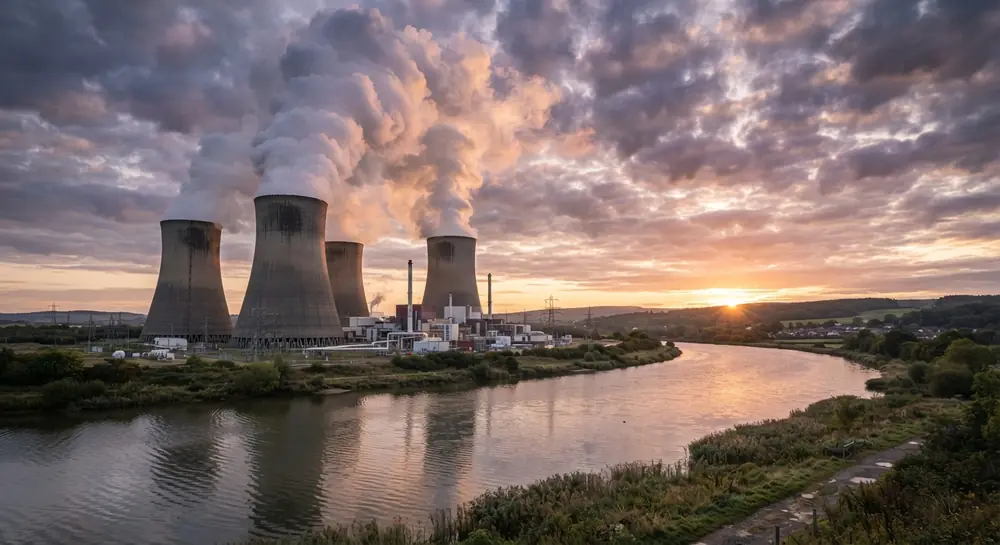
20-year deal to restart a nuclear reactor
Three Mile Island Unit 1 — power dedicated to its data centers.
LET ME EXPLAIN SOMETHING · 3-MIN READ
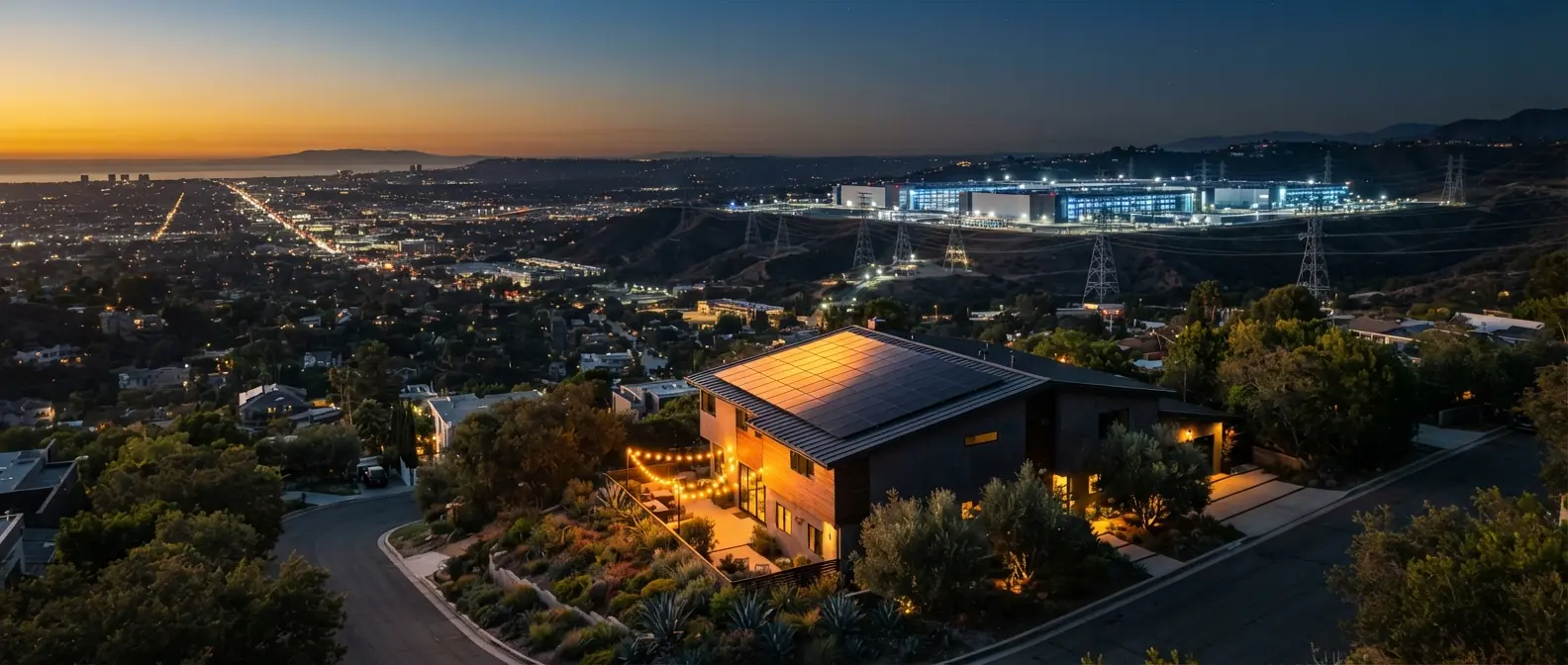
Part of it is rates. Part of it is weather and wildfire costs. And there's a new force arriving that almost nobody mentions — it's glowing on the horizon.
THE SHORT ANSWER
Three forces push your rate up. The newest one is enormous.
Updated October 13, 2026 · Sources linked below
01 THE MACHINES MOVED IN
Different companies. Different models. One diet: electricity. Every one of them lives on racks of NVIDIA GPUs inside warehouse-sized data centers that run hot, 24 hours a day.
PUT ANOTHER WAY
ONE AI rack = 80 homes
Each icon is one LA home's moment-to-moment draw (~1.25 kW). A single modern AI rack pulls all of it — and a campus holds thousands of racks.
Same house. Same habits.
My bill in 5 years…
…AI is already pushing power prices up — and it's just getting started.
ecobillsolar.com/2031 · What's yours? →
Why does this hit my bill? see Chapter 02 →
growth in data centers' share of U.S. power in five years
announced for Stargate multi-gigawatt AI campuses, unveiled at the White House
ONE AI rack
= 80 homes.
ecobillsolar.com/ai-bill
CHAPTER 01 IN ONE IMAGE
One AI rack draws as much power as 80 homes — around the clock.
WHAT YOUR FRIEND SEES
1 AI rack = 80 homes
02 THEY PLUG INTO YOUR GRID
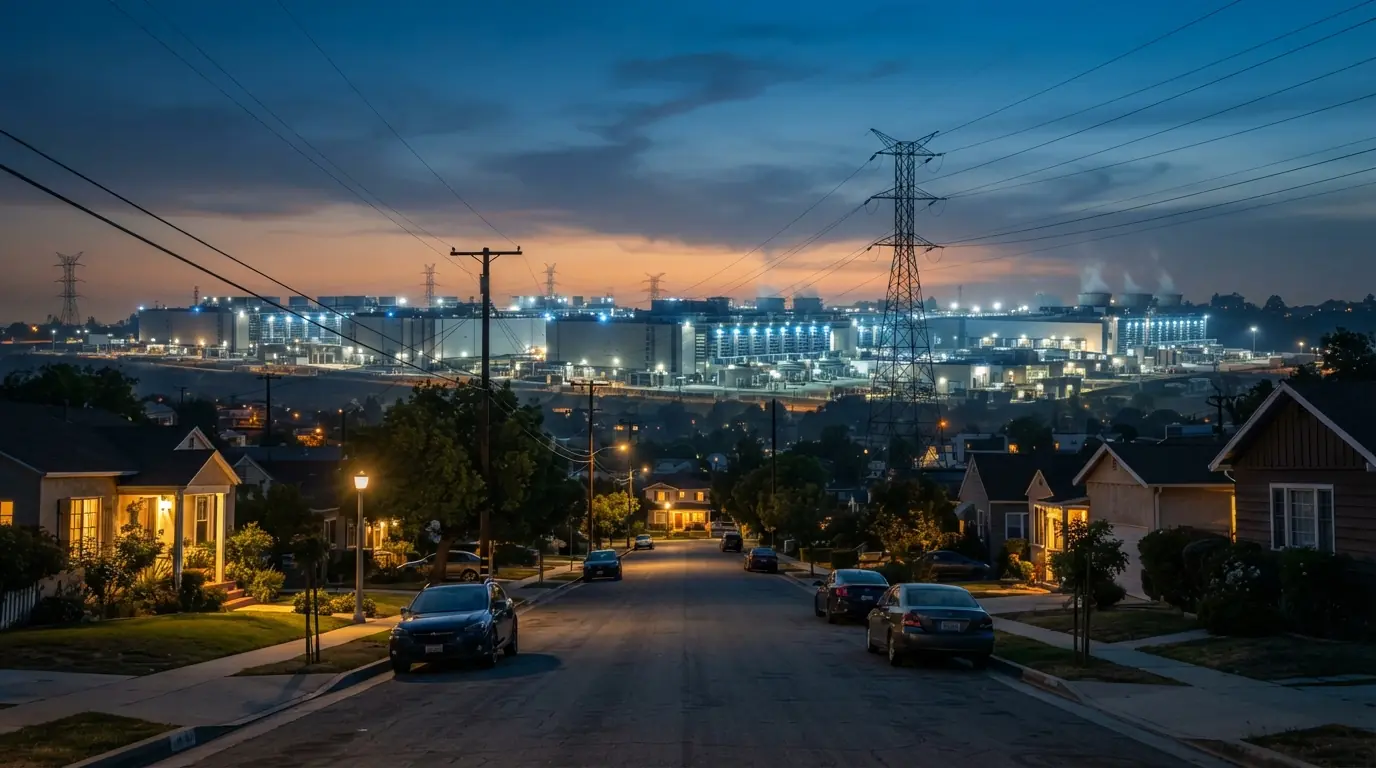
The same wires. The same power plants. The same finite capacity your air conditioner competes for on a July afternoon.
Under the traditional system:
IT'S ALREADY VISIBLE
~9× jump in the price of future grid capacity
Per MW-day, PJM capacity auction — the largest U.S. grid market. Its independent market monitor named data-center load as a direct cause. PJM auction report
AND IT'S GLOBAL
Data-center power use roughly doubles by 2030 — more than all of Japan uses in a year
Source: IEA, Energy and AI. Circle areas illustrative.
California was already the expensive grid — wildfire costs, transmission upgrades, repeated rate filings. Now it has a very hungry new customer. New state laws signed in September 2026 aim to make data centers pay their share — here's what they say.
See what solar costs in LAThere is no separate grid for AI. There's just the grid. And who pays for it is still being decided.
ecobillsolar.com/ai-bill
CHAPTER 02 IN ONE IMAGE
There is no separate grid for AI. There's just the grid — and the fight over who funds the buildout has started.
03 WATCH WHAT THEY DO
They're not waiting for electricity to get cheaper. They're buying supply at a fixed cost, for decades.
Locked in · 20 yrsMICROSOFT
Three Mile Island Unit 1 — power dedicated to its data centers.
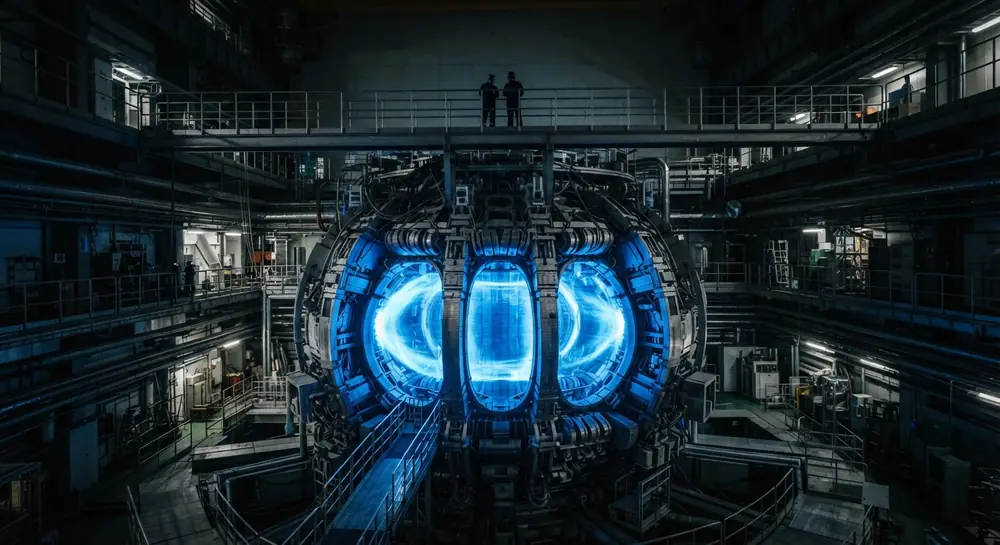 Locked in · Fusion
SAM ALTMAN
The OpenAI CEO has invested in the power plants of the future.
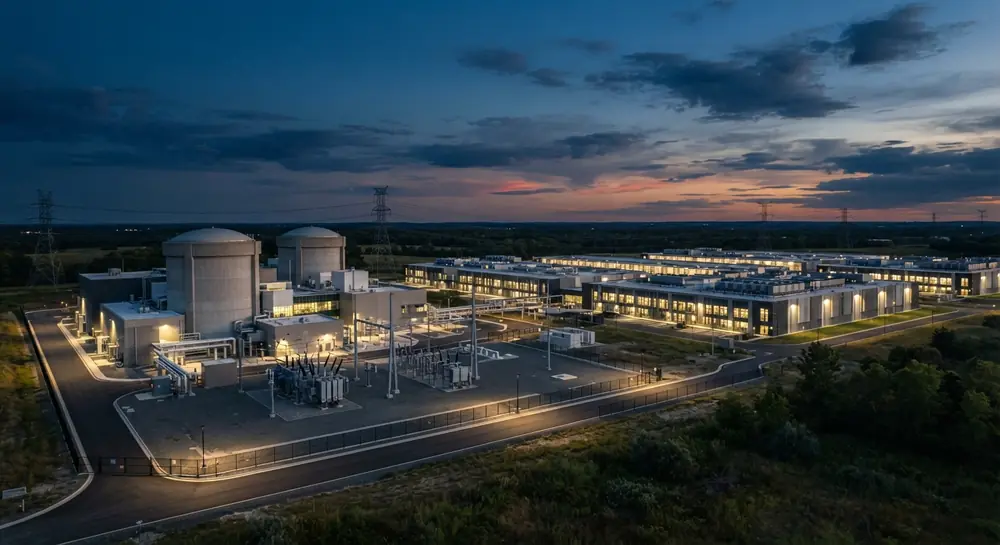 Locked in · Nuclear
GOOGLE & AMAZON
Small modular reactors and long-term nuclear supply contracts.
They locked in their power. What's your plan?
ecobillsolar.com/ai-bill
CHAPTER 03 IN ONE IMAGE
Microsoft locked in power for 20 years. Big Tech isn't waiting — so what's your plan?
THE WAY OUT
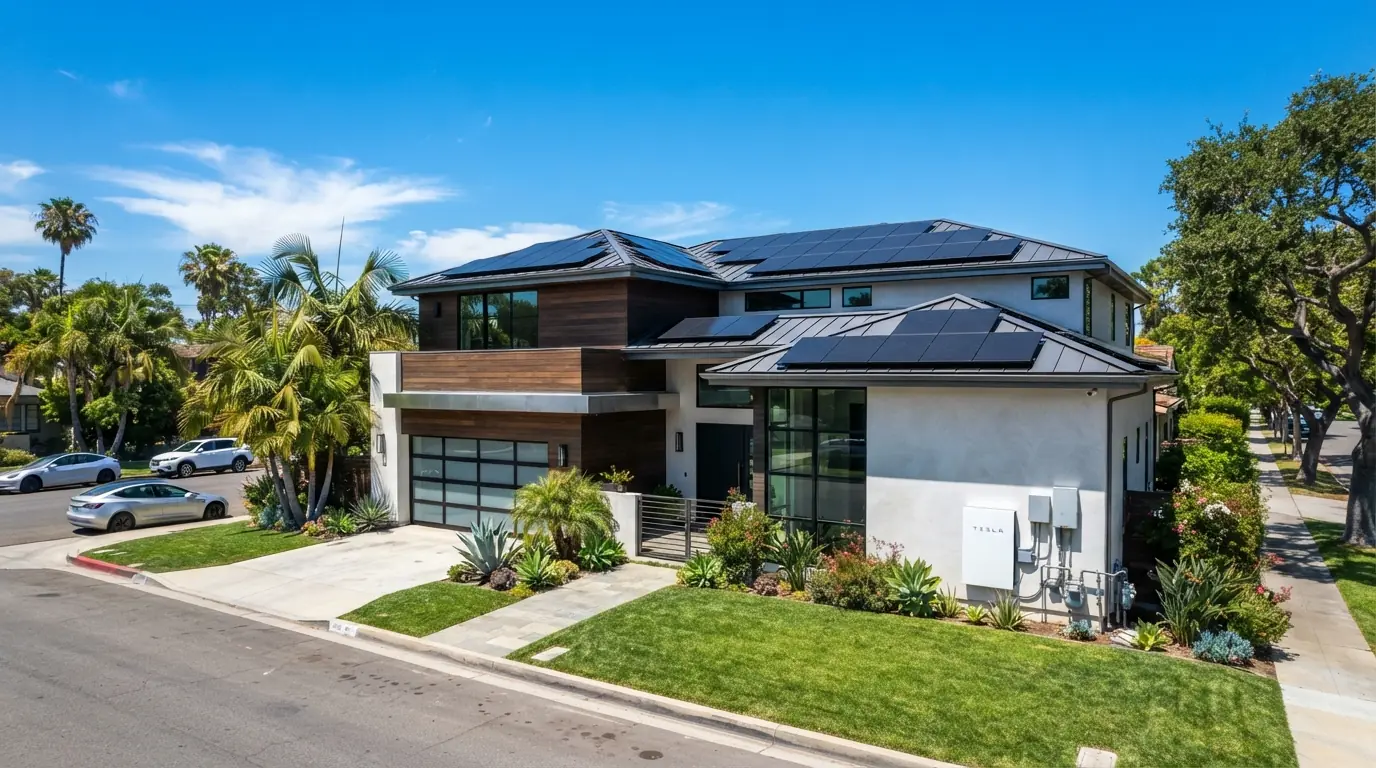
Solar in 2026 isn't an eco statement. It's the same move Microsoft made — at house scale: a power plant you own, at a fixed cost, on your roof.
YOUR NUMBER
$250 / mo
Where $250/mo goes over 25 years
Paid to the utility if you keep renting
≈ $143,000 — and you own nothing
Illustration only — $250/mo rising ~5%/yr, California's 2010–25 average (2019–23 ran ~10%/yr). Savings assume solar offsets 70–90% of usage at today's LA rates. Your free quote pins the real number.
⚡ THE UTILITY CO. ⚡
RECEIPT FOR RENTING YOUR POWER
Customer: You · Los Angeles, CA
Years 1–5 electricity$16,580
Years 6–10 electricity$21,160
Years 11–15 electricity$27,000
Years 16–20 electricity$34,460
Years 21–25 electricity$43,980
Rate hikes (fine print)included
TOTAL PAID$143,180
ITEMS OWNED0
PANELS ON YOUR ROOF0
Thank you for renting your power.
No refunds. See you next month.
ecobillsolar.com/receipt
THE RECEIPT NOBODY SENDS YOU
We printed it so you can show it to whoever splits the bill with you. Your receipt updates with your own monthly bill — move the slider above.
Flip side: an owner's receipt shows $100k–$129k saved — and a power plant on the roof.
Illustration: $250/mo rising ~5%/yr (California's 2010–25 average), rounded to the nearest $10.
THREE WAYS OFF THE RATE ESCALATOR
Installed by our own LA crews — solar engineered by master roofers.
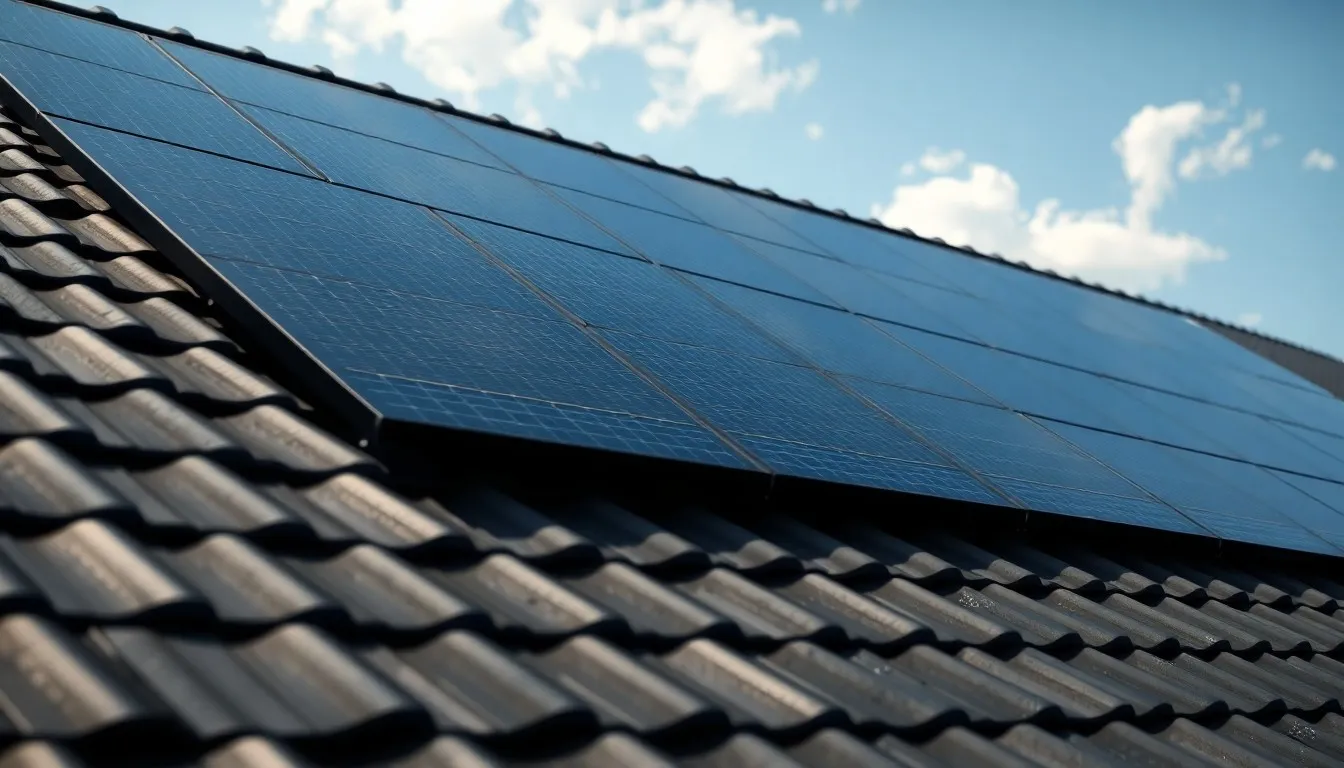
Own your power at a fixed cost. Transparent LA pricing, sized to your bill.
See real LA pricing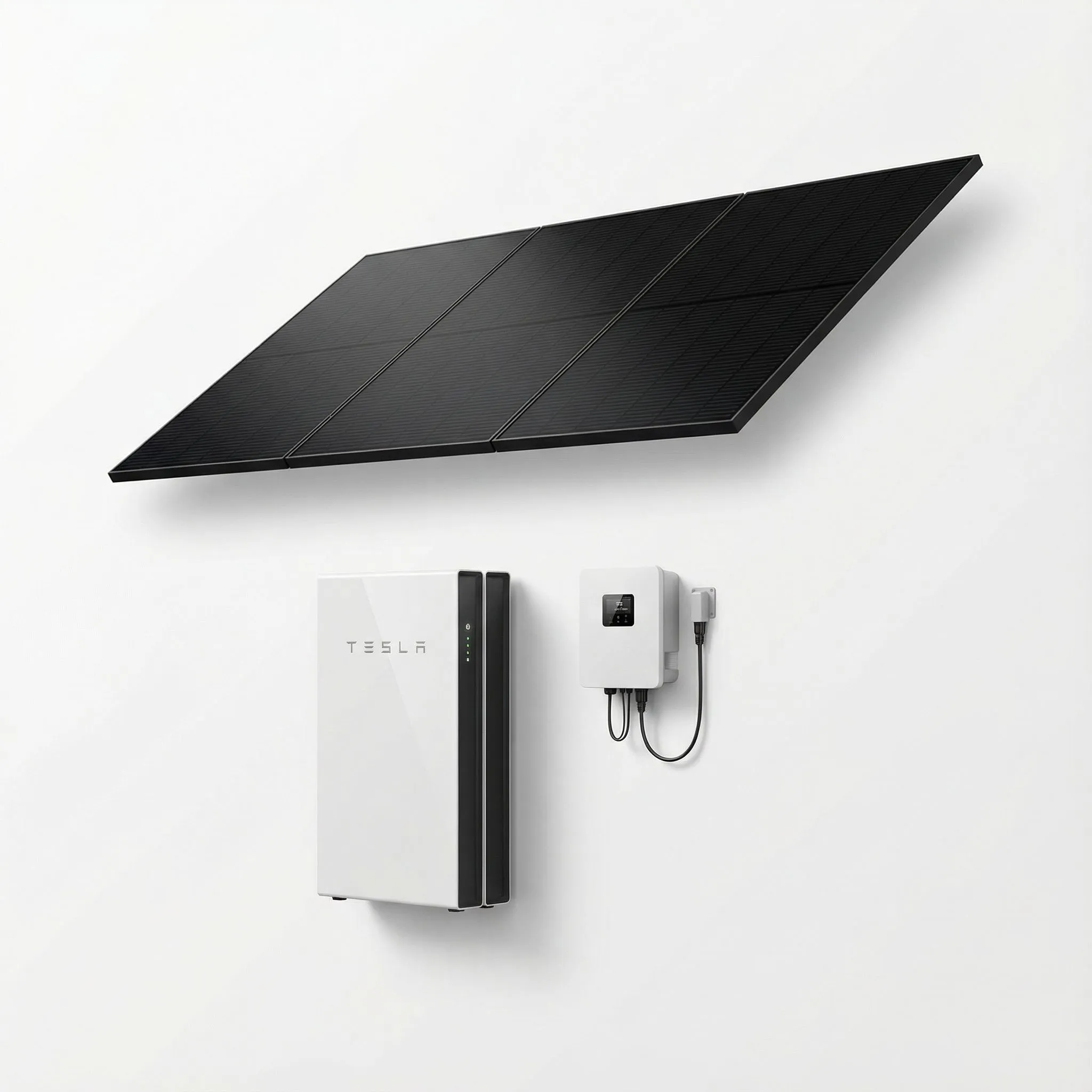
Store midday solar for expensive evenings, ride out blackouts, earn NEM 3.0 credits.
How batteries pay off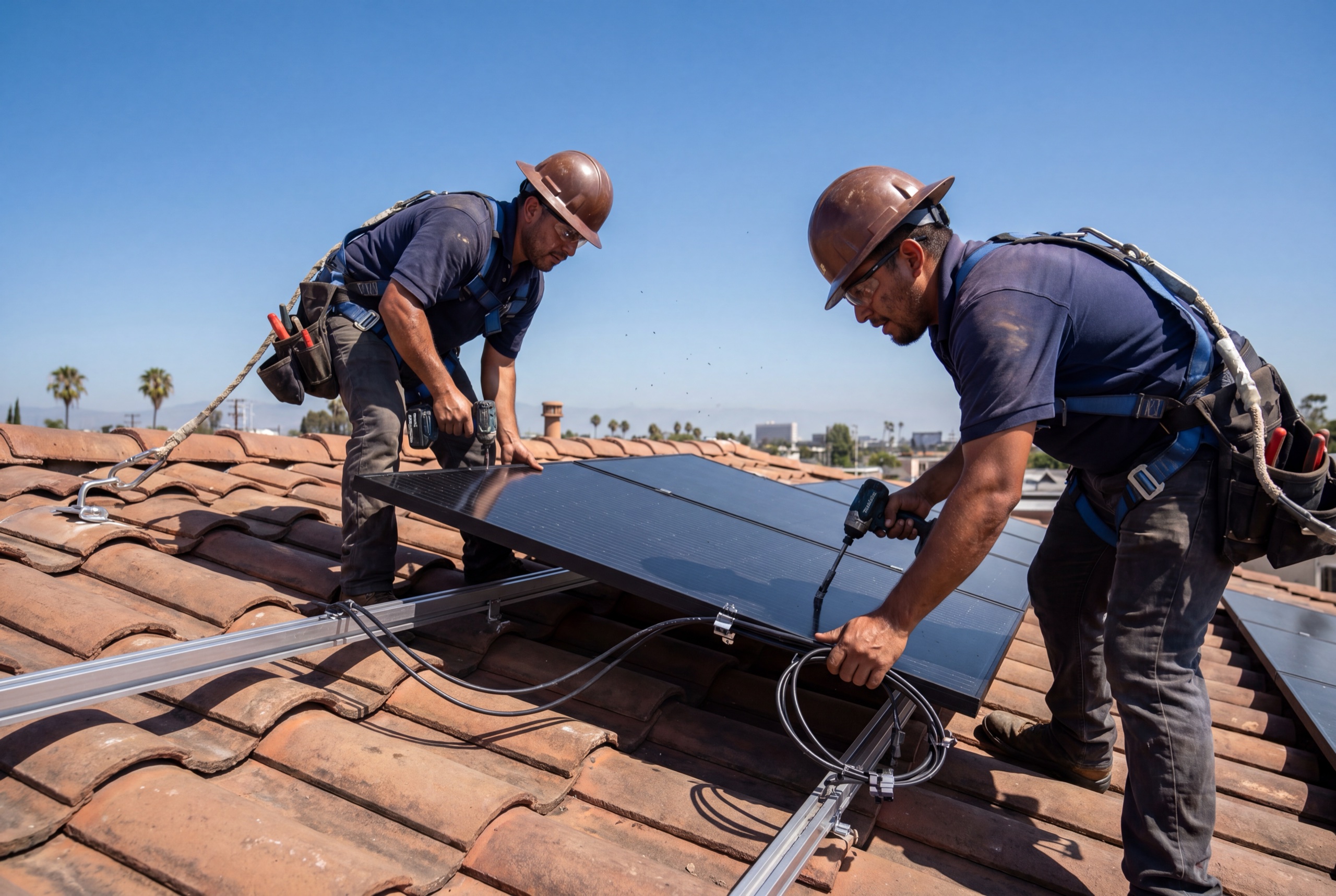
We're roofers first — panels and roof done right together, penetrations warrantied 10 years.
Solar roofing explainedFACT-CHECK · CALIFORNIA
We read the regulators, the new laws and the analysts so you don't have to. Here's what is actually known — every claim linked to where it came from.
THE SHORT ANSWER
No precise figure — yet.
There is no precise figure yet for the additional cost added to residents' electricity bills in California specifically due to AI data centers.
However, the state's independent oversight bodies and energy regulators have warned that the massive infrastructure upgrades needed to serve AI data centers could significantly drive up residents' bills if not properly managed.
FOR COMPARISON — OTHER STATES
MARYLANDup to $216/yr
The state's consumer advocate forecast new data-center costs could run residents as much as $216 a year.VIRGINIABills surged
Electricity bills have surged in parts of the state as data centers multiply.CALIFORNIAPushing back
The state has taken active steps to keep tech companies from passing their costs on to ordinary customers.A utility like SCE or PG&E receives a large number of requests to connect data centers.
The utility may spend billions of dollars to:
Under the traditional regulatory system, those construction costs are distributed among customers and added to everyone's bills.
In other words: a major technology company needs significant energy — yet ordinary residents could end up paying part of the cost of the new infrastructure built to supply it.
SEVEN NEW LAWS ON DATA CENTERS
Seven data-center bills signed September 21, 2026; most start January 1, 2027. 14 · gov.ca.gov
WHAT THE LAWS DO
Data centers pay for their own hookup — grid upgrades and water lines.
Special data-center rates by 2028: upfront collateral, 10-year minimum payments, a bigger wildfire share.
A state study of whether data-center costs shift onto you — due January 1, 2027.
WHAT STILL REACHES YOUR BILL
Covered
Partly covered
Not covered
Bottom line: the laws shield part of the cost. They can't give data centers a different grid.
Fair point: it can also go the other way — if data centers pay their full share, others can pay less (Berkeley Lab). That's the "laws work" future below, and solar still wins there.
SO WHICH FUTURE DO YOU GET?
Nobody knows yet whether the new laws will keep data-center costs off your bill. So don't bet on it. Here's your bill in 2031 in all three futures — and what solar saves in each.
Solar wins in all three. You don't have to bet on Sacramento — or on AI.
+5% = California's 2010–25 average (EIA). +10% = 2019–23 (LAO). +15% = 2019–23 plus Carnegie Mellon's Northern Virginia data-center projection — a scenario. Savings = that year's bill × 12 × 70–90% solar offset.
If your electricity bill in California is higher than usual, the main reasons are:
WHAT THE SOURCES SAY
AI servers are not the primary reason for today's high bills.
According to the cited sources, California regulations are designed to limit how much of AI data centers' costs can be passed on to residents.
WHAT WE KNOW FOR SURE
Electricity prices could have risen even without AI, due to inflation, wildfire prevention measures, and grid repairs.
Data centers are increasing the demand for electricity, which may require new power plants and grid expansion.
EPRI · POWERING INTELLIGENCE 2026
Data centers' share of U.S. electricity consumption
This refers to the growth in consumption — not the increase in prices.
HYPOTHETICAL MODEL
Two paces for the same house and habits — one measured, one a scenario.
MONTHLY BILL IN 2031
The 10% is California's 2019–23 average (LAO: rates up ~47% in four years). The 15% adds what Carnegie Mellon / NC State project for Northern Virginia (generation costs >25% higher by 2030) — a scenario, not a California forecast. California's longer 2010–25 trend was ~5% a year, and rates dipped in 2025.
Key takeaway NOT CONFIRMED
We do not currently have a confirmed figure for California showing, for example:
2019–23 pace: +10% a year With AI: +15% a year?
The 10% is measured. The extra 5 points is a scenario borrowed from data-center hot spots. California's SB 57 authorizes a state study of exactly this cost shift.
Your electricity bill was already rising. AI data centers could add even more pressure. But how much of that cost will reach your home?
— EcoBill
Summary
AI data centers consume large amounts of electricity and can drive up the cost of building out the electrical grid. However, this does not mean that every California resident is already paying a specific amount because of AI. The state is regulating the system so that these additional costs are borne primarily by data centers rather than ordinary households. It can try to keep AI's costs off your bill — it can't keep the rest of the rise off it. Your roof can.
Checked October 13, 2026. We refresh this page every quarter. Source titles are shown in their original language.
AI isn't the only reason your bill went up — usage, weather, tiered pricing and wildfire costs all play a part. Solar isn't for everyone either: renters and heavily shaded roofs are poor fits. What we claim is narrower and easy to check: LA rates are among the nation's highest, the structural drivers point up, and a free quote is the only way to know your number. If the math doesn't work for your roof, we'd rather tell you.
FREE PDF · 2026
The LADWP
Rate-Hike Report
What's coming to your bill, when — and the three ways LA homeowners are getting ahead of it.
Get the free reportYOUR BILL, ANSWERED HONESTLY
Four things usually stack up: (1) your usage — AC, pool pumps, EV charging; (2) your utility's rates — Los Angeles households pay roughly $0.30–$0.45/kWh, among the highest in the continental U.S.; (3) rate design — tiered and time-of-use pricing charges more for the same kilowatt-hours; and (4) the cost of the grid itself — repairs, wildfire prevention and new capacity, which utilities recover through rates. The newest demand driver is AI data centers, which federal researchers project could consume up to 12% of U.S. electricity by 2028, up from about 4.4% in 2023.
A doubled bill usually means two things happened at once: a rate increase took effect (California utilities have filed repeated increases in recent years) and your usage rose — summer AC, guests, a new EV, or a shifted time-of-use window billing your evening usage at peak prices. Check your bill's rate-per-kWh against last year's: in many cases the rate, not your behavior, did most of the doubling.
It's one growing force among several — and we'd rather be precise than dramatic. Data centers used about 4.4% of U.S. electricity in 2023, and a federal (LBNL) report projects 6.7%–12% by 2028. In the largest U.S. grid market (PJM), the price of securing future capacity jumped roughly nine-fold in the 2025/26 auction, and the market monitor named data-center load as a direct cause. In California there is no precise figure yet for how much AI adds to household bills, and new 2026 state laws aim to make data centers pay for their own grid upgrades. AI didn't start the rise in your bill — but it adds sustained upward pressure on demand.
California's rates are among the nation's highest because ratepayers fund more than power: wildfire mitigation and liability, transmission upgrades, grid maintenance and repair, and public programs are all recovered through rates, on top of general inflation. Add rising demand — including from data centers — and the trajectory has been steadily upward, with utilities filing repeated increases in recent years.
Beyond the statewide drivers, both utilities use tiered or time-of-use pricing, so summer afternoon and evening usage bills at premium rates. LADWP and SCE have each implemented rate adjustments in recent years to fund infrastructure. If your bill spiked without a lifestyle change, compare this year's per-kWh rate to last year's — that's usually where the jump hides.
We won't pretend: the structural drivers point up, not down. Grid expansion for data centers and electrification, wildfire costs, and transmission upgrades all get recovered through rates over decades. That's the honest case for locking in your own generation: solar doesn't bet on rates falling — it makes them largely irrelevant to you.
Short term: shift heavy usage off peak hours, audit always-on loads, and check you're on the best rate plan. Structurally: rooftop solar (with a battery under NEM 3.0) converts your largest variable cost into a fixed one you own. It isn't for everyone — renters and heavily shaded roofs are poor fits — but for most LA homeowners, it's the one lever that removes you from the rate escalator. A free quote will tell you your specific number.
THEIR GRID. YOUR ROOF.
Find out — in 60 seconds, for free — what it costs to own your electricity price before the next rate filing lands.