
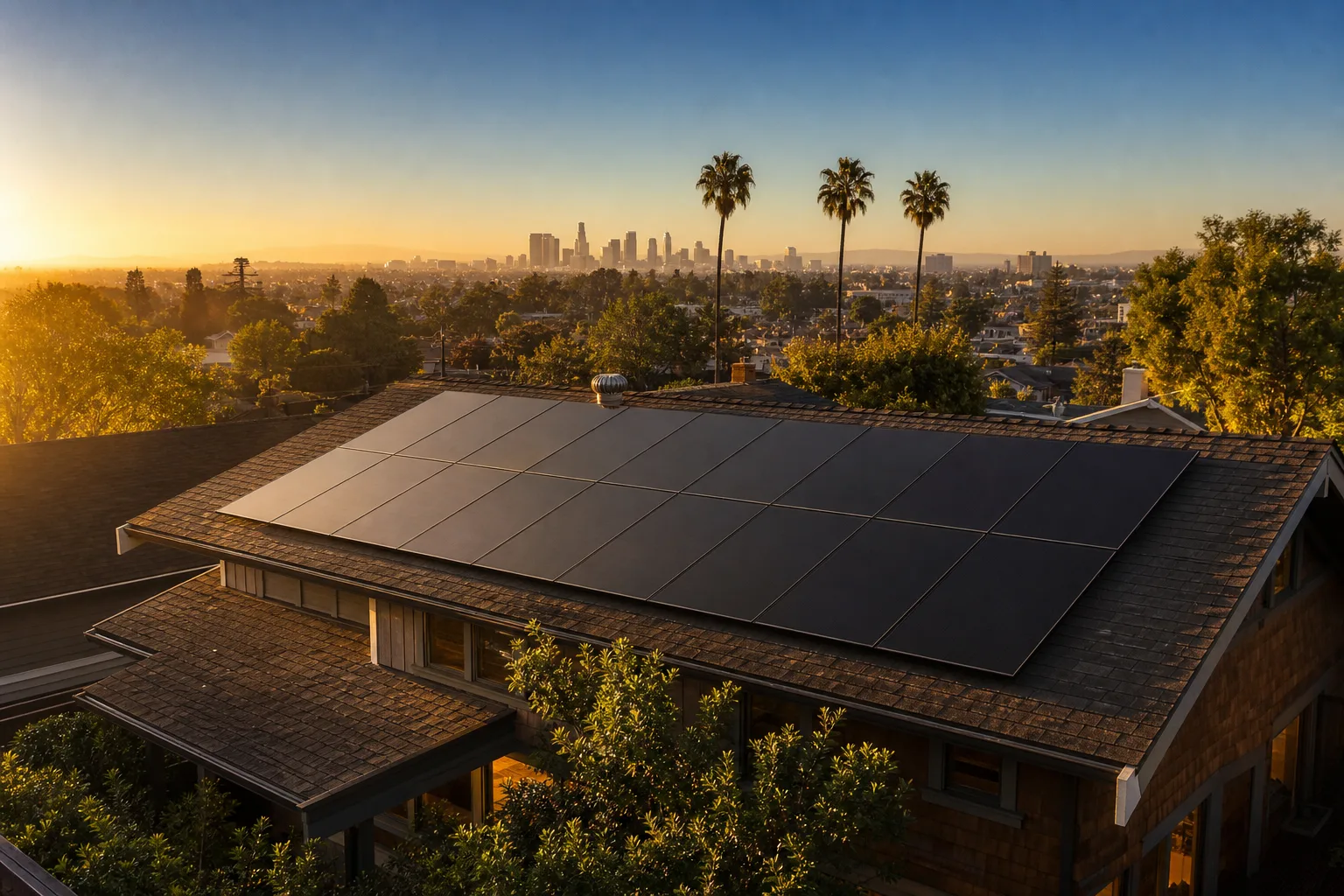
Solar Battery Installation
in Los Angeles
The short answer: installing a home battery in Los Angeles typically costs $10,000–$20,000 all-in, depending on capacity and how much of your home you back up. The work itself takes one to two days on site; the full process — design, city permit, installation, inspection, and utility Permission to Operate — runs about 3–8 weeks. Batteries can be added to almost any existing solar system (AC-coupled retrofit) or built into a new install. For SCE homes on NEM 3.0, a battery is what makes the export math work — storing cheap midday solar and exporting it at premium evening rates. LADWP, Glendale, Burbank, and Pasadena homes aren't on NEM 3.0 at all; there a battery is outage protection plus time-of-use savings.
60 seconds · Free · Line-item quote with every incentive in writing
Updated July 18, 2026 · Reviewed quarterly as hardware and incentives change
How much does solar battery installation cost in Los Angeles?
Three things set the price: capacity (how many kilowatt-hours you store), backup scope (essentials circuit vs. whole home — whole home often needs panel work), and electrical condition (older main panels sometimes need upgrading first).
A single ~13 kWh battery backing up essentials — fridge, lights, Wi-Fi, garage door, phone charging — is the most common LA configuration and lands in the low-to-mid teens installed. Whole-home setups with air conditioning on backup usually need two or more batteries.
Can I add a battery to my existing solar system?
Almost always yes — and usually without touching your panels. There are two paths:
AC-coupled retrofit. The battery brings its own inverter and connects at your electrical panel, alongside whatever solar system you already have — any brand, any age. This is the standard retrofit route and what most LA battery additions use.
DC-coupled (hybrid) install. The battery and solar share one hybrid inverter. Slightly more efficient, but it makes the most sense on new systems — or when your existing solar inverter is near end-of-life and due for replacement anyway.
We tell you which path actually pencils out for your setup — including the honest case where keeping your current inverter and AC-coupling is the cheaper, better answer.
Which battery should I choose?
We install both major platforms. The right one depends on your solar system, your loads, and your budget — not brand loyalty.
| Tesla Powerwall 3 | Enphase IQ Battery | Multi-battery / whole home | |
|---|---|---|---|
| Usable capacity | ~13.5 kWh per unit | ~10 kWh per unit (modular) | 27–40+ kWh combined |
| Inverter approach | Integrated hybrid inverter | Built-in microinverters | Stacked units share loads |
| Best fit | Most single-family homes; strong value per kWh | Enphase solar systems; incremental sizing | Large homes, whole-home backup, EV charging |
| Backup scope | Essentials to near-whole-home | Essentials, expandable over time | Whole home including AC |
| Typical installed cost | $12,000–$16,000 | $10,000–$15,000 | $20,000–$35,000+ |
Capacities are manufacturer-published usable figures; installed prices are typical LA-area ranges as of mid-2026 and vary with electrical scope. Going Powerwall? See our dedicated Tesla Powerwall installation guide.
How does the installation process work?
Five steps, start to finish. The site work is fast — the calendar time is mostly permits and utility queues.
- 1
Home energy assessment
Day 1We review your usage, your electrical panel, and what you actually want backed up — essentials or whole home. This decides battery count and placement.
- 2
System design & fixed quote
~48 hoursYou get a line-item design: battery model, capacity, backup scope, and the installed price in writing — including every incentive you genuinely qualify for.
- 3
Permits & paperwork
1–4 weeksWe file the city electrical permit and the utility interconnection application. Timelines vary by city — LADWP-area and SCE-area offices move at different speeds.
- 4
Installation day
1–2 daysMounting, wiring, backup gateway or sub-panel work, and commissioning. Your power is off for a few hours during the cutover, then the system is live in backup mode.
- 5
Inspection & Permission to Operate
1–3 weeksCity inspection, then the utility grants PTO. From that point your battery earns under your rate plan — evening exports for SCE homes, TOU savings elsewhere.
Why batteries pay twice in Los Angeles
If you're on SCE (NEM 3.0): midday solar exports earn roughly 8 cents per kWh, but evening exports are worth several times that. A battery stores your noon production and releases it at 6–9pm — either powering your home through the expensive window or exporting at premium rates. That arbitrage is the core of post-NEM 2.0 solar economics. Full breakdown in our NEM 3.0 guide.
If you're on LADWP, GWP, BWP, or PWP: NEM 3.0 doesn't apply to municipal utilities. Your battery case is outage protection and time-of-use savings — still real, differently shaped.
Either way: when the grid goes down, your solar keeps working only if a battery is attached. The outage side of the math lives in our SCE power outage guide.
Where we'll be straight with you
A battery is a five-figure purchase, and not every home needs one on day one. If your outages are rare and you're on a municipal utility with decent net metering, solar-only may still be the right first step — batteries can be added later without redoing anything. On incentives: the federal homeowner tax credit ended for installations after 2025, so we won't quote it; lease and PPA structures can still capture the 30% federal value through 2027, and SGIP rebates depend on available program funding. Whatever applies to your address goes in writing with your quote — and if the math doesn't work for your home, we'd rather tell you.
Battery installation, answered honestly
What LA homeowners actually ask before buying a battery.
How much does solar battery installation cost in Los Angeles?
A professionally installed home battery in the LA area typically runs $10,000–$20,000 all-in, depending on capacity and how much of your home you want backed up. A single ~13 kWh battery covering essentials sits at the lower end; whole-home coverage with two or more batteries reaches the upper end. The installed price includes the battery, inverter or gateway hardware, electrical work, permits, and utility interconnection paperwork. California's SGIP rebate can reduce the net cost when program funding is available — we confirm current eligibility in writing with every quote.
Can I add a battery to my existing solar system?
Yes — in most cases without touching your panels. Retrofits use an AC-coupled battery, which has its own built-in inverter and connects to your electrical panel alongside your existing solar inverter. That means the battery works with virtually any existing system, regardless of brand or age. If your solar inverter is near end-of-life anyway, replacing it with a hybrid (DC-coupled) setup at the same time can be more efficient — we'll tell you which path pencils out for your system.
Which home battery is best — Tesla Powerwall or Enphase?
There's no universal winner, only fit. Tesla Powerwall 3 gives you around 13.5 kWh usable and a powerful integrated inverter — strong value per kWh, and one unit covers most single-family essentials. Enphase IQ batteries are modular and microinverter-based — they pair naturally with Enphase solar systems and let you size storage in smaller increments. For large homes, multi-battery configurations of either brand deliver whole-home backup. We install both and quote what your loads actually need, not what's on the truck.
How long does battery installation take?
The physical installation is usually one day — occasionally two for multi-battery or main-panel-upgrade jobs. The full timeline is longer: from signed contract through design, city permit, installation, inspection, and utility Permission to Operate typically takes about 3–8 weeks in the LA area, driven mostly by your city's permit office and your utility's queue, not the work itself.
Does a battery make sense financially under NEM 3.0?
For SCE customers, batteries are the core of the economics. NEM 3.0 pays little for midday solar exports but substantially more for evening exports — so a battery stores your cheap noon production and exports or self-consumes it during expensive evening hours. If you're on LADWP, Glendale Water & Power, Burbank Water and Power, or Pasadena Water and Power, NEM 3.0 doesn't apply to you at all — there a battery is primarily outage protection and time-of-use savings rather than an export play.
Is there still a tax credit for home batteries?
The federal homeowner credit (Section 25D) ended for systems installed after December 31, 2025 — anyone still advertising it to you is a red flag. What remains: third-party ownership. With a lease or PPA, the system owner can still claim the 30% federal value and pass it into your monthly rate, a route available through 2027. California's SGIP battery rebate also exists independently, subject to program funding. We put every incentive you actually qualify for in writing with your quote.
Do I need a battery if I just have solar panels?
It depends on what you want solar to do. Grid-tied panels alone lower your bill but shut off during outages and — under NEM 3.0 for SCE homes — earn little for midday exports. A battery fixes both: backup power when the grid fails, and evening export credits when it doesn't. If outage protection is your main concern, start with our SCE power outage guide; if bill savings drive you, the NEM 3.0 math usually decides it.
Your solar makes the power.
A battery makes it yours.
Get a line-item battery quote — sized to your loads, with every incentive you actually qualify for, in writing, in 60 seconds.